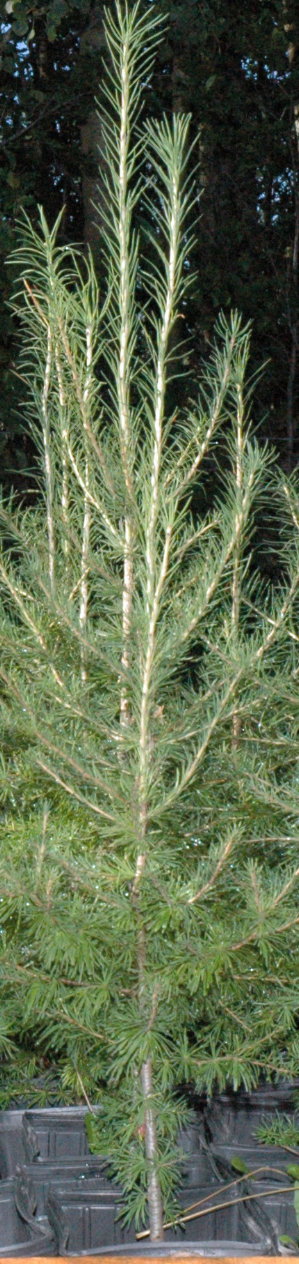
A row of 3 foot larch in two gallon pots. Fairly typical appearence for midsummer.
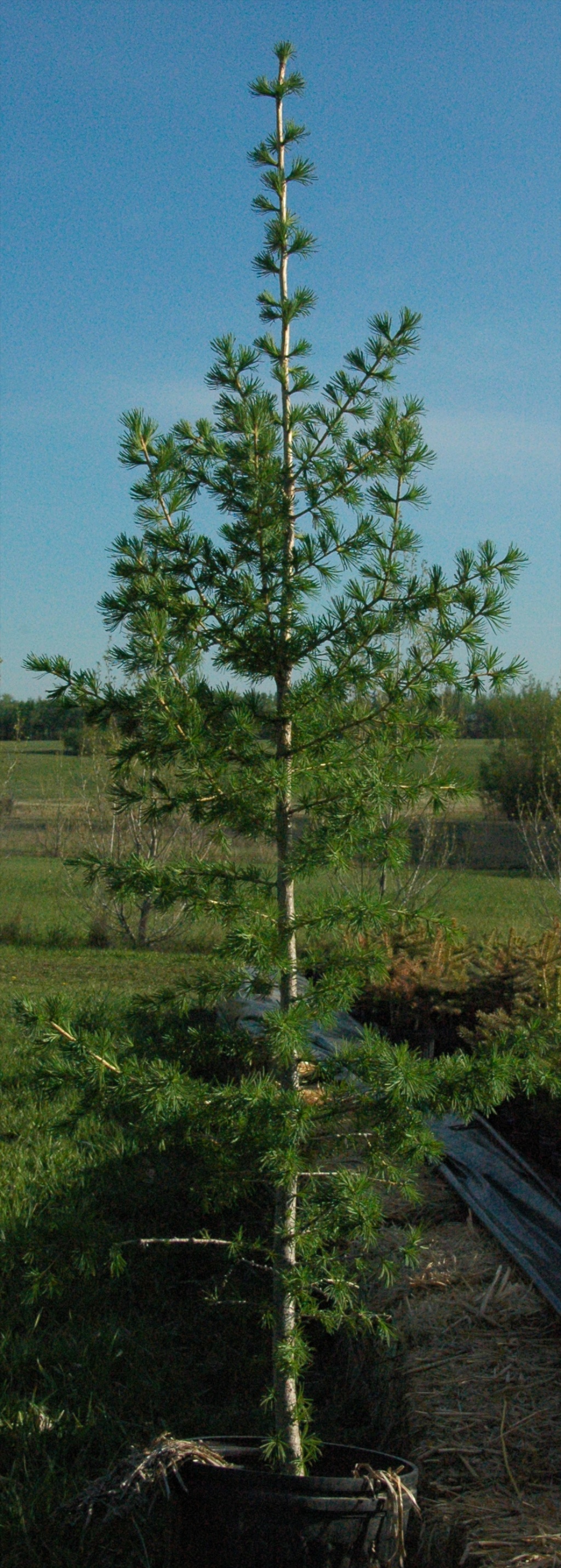 This is about a 4 year old.
Siberian Larch
Larix sibirica
This is one tough tree. In my first year of growing trees, I missed watering a pen of 160 larch. It was hot. It was August. Suddenly all but about 6 of the larches turned yellow, dropped their needles.
I used some words that can't be printed here on a family website.
I was busy, and didn't get around to emptying the pots to reuse.
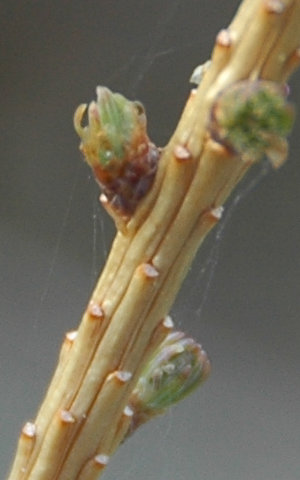
Early May. Grass is starting to turn green, but no trees are leaving out yet. Brave little larch buds start to open
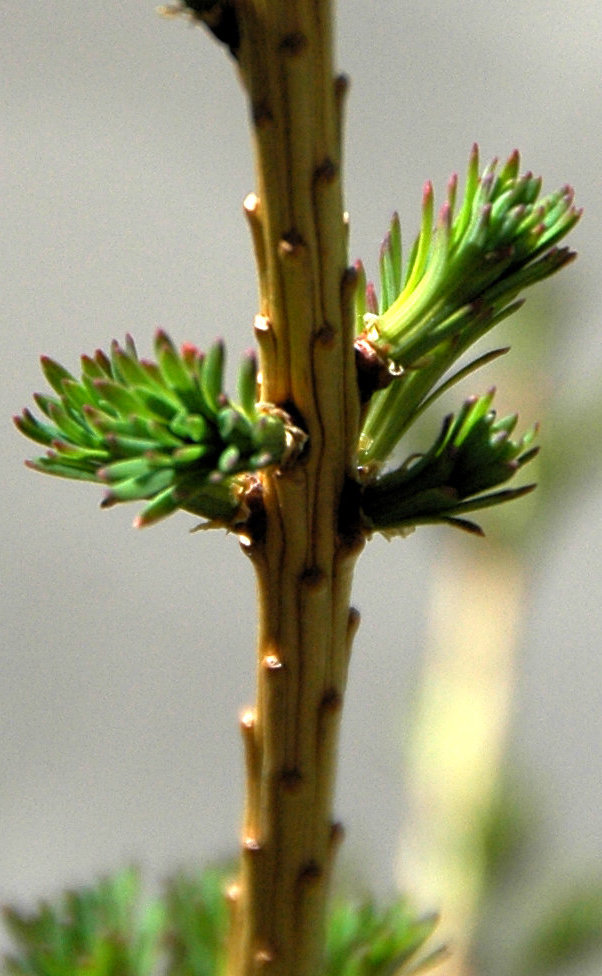
One week later.
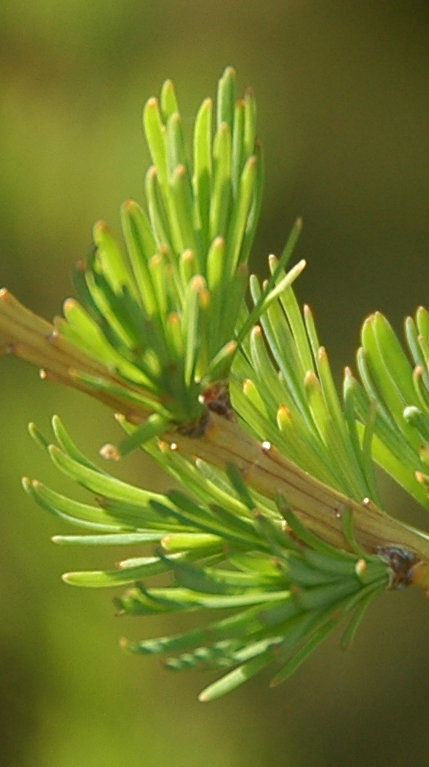
And another week.
The following spring, what did I see: Green bits. They were about a week later than the rest of the batch, but nearly all of them survived.
So now my motto is that a tree isn't dead until it's two years dead.
Larch are unusual conifers: They shed their needles in the fall. Most conifers are pretty much static thorugh the year. Larch greet spring looking like a dead christmas tree with peppercorns glued on the branches. The black buds break open and initially there are these tiny tufts of pool table felt. The net effect from a distance is a thin green fog. The needles open up as pale green. As the summer progresses they get darker, and fill it a bit. In fall the needles turn yellow orange for about two weeks.
Compared to most conifers Larch produce very light shade. You can garden under the tree. Acid loving plants are best, as the fall of needles makes the soil acidic. Bonemeal can compensate.
Larch can be grown free form, or can be pruned into a hedge, I'm told. Mind you, I've not seen any one do that.
Story time
I was doing a tour of farmstead plantings. One house had a Siberian Larch planted about 30 feet from their kitchen door. The tree was decades old and must have been pushing 80 feet.
The farmer had taken the bottom limbs off to about 8 feet. The result was a 30 foot diameter 'green room' that started about 15 feet from the kitchen door. They kept a picnic table under the tree, and this became their dining room for most of the summer.
Farmer had a ladder that he leaned up against the trunk to enable the grand kids to get into the lower branches. First summer he did that they only saw the kids at meal times. It was Peter Pan, Pirates of the Caribean, all summer long as they zipped up and down that tree.
Guidelines
Features:
- Needle tree that goes through seasonal changes like a leaf tree.
- Orange-yellow fall colour.
- Open shade permits growing other things below them.
- Very drought tolerant once established.
Zone: Zone 2
Size: 50 to 80 feet tall by 25 feet wide.
Growth rate: Medium fast. 2-3 feet per year.
Soil: Wet to moderately dry. Doesn't tolerate chalky or shallow soils.
Sun: Full sun preferred. Tolerates light shade.
Water: During first year. Drought tolerant. Water when top 2 inches of soil are dry, and water deeply. Should only need to be watered 3-4 times. If you continue to water you will get faster growth, but continue to water deeply when you do.
Got something to say? Email me: sfinfo@sherwoods-forests.com
Interesting? Share this page.
Want to talk right now? Call me: (8 am to 8 pm only, please) 1-780-848-2548
Do not arrive unannounced. Phone for an appointment. Why? See Contact & Hours That same page gives our hours of operation.
Back to Top
Copyright © 2008 - 2021 S. G. Botsford
Sherwood's Forests is located about 75 km southwest of Edmonton, Alberta. Please refer to the map on our Contact page for directions.